How to Start a Language Exchange Conversation
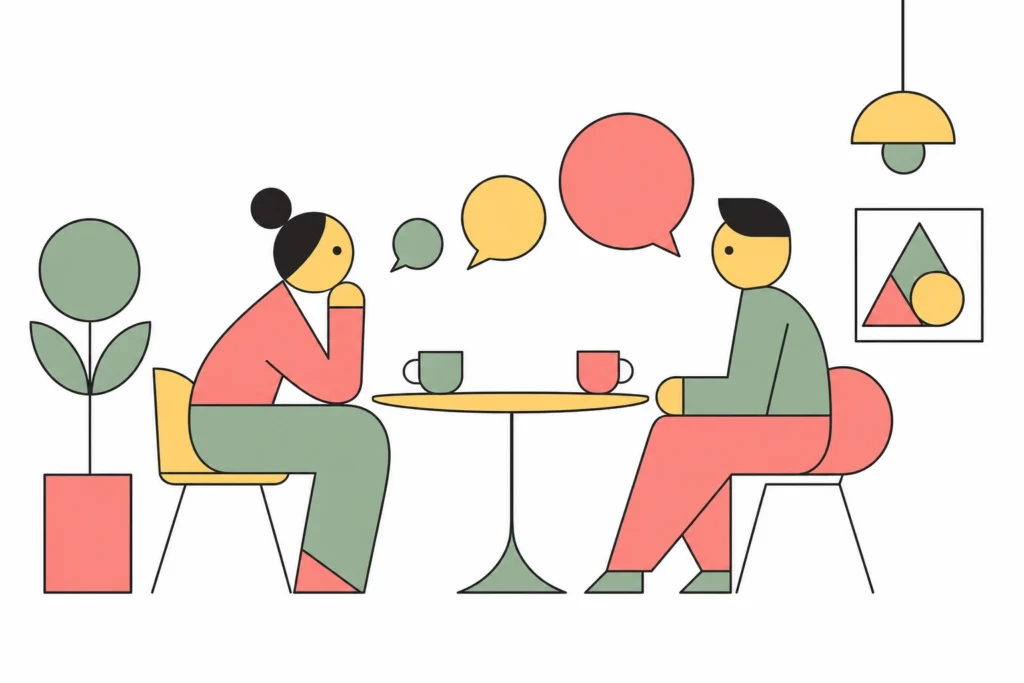
The first few minutes of a language exchange are where most nerves live. You have found a partner, agreed on a time, and now you have to actually talk — in a language you are still learning, to someone you barely know. The good news is that a strong opening is mostly a matter of preparation, not talent.
Start With the Ground Rules, Not the Language
Before any real conversation, spend two minutes agreeing on how the session will run: which language goes first, how you will split the time, and how you want to be corrected. This tiny bit of structure removes almost all the awkwardness, because both people know what is coming. It is the same framework described in our guide to the tandem method, and it works from the very first meeting.
Bring Three Easy Topics
Never rely on the conversation to invent itself. Bring three simple topics you can talk about in your target language — your morning, a place you like in the city, a show you are watching. Easy topics keep you speaking instead of freezing, and they give your partner natural openings to help. Save difficult subjects for when you have a rhythm.
Use the “Say It Twice” Trick
When you hit a word you do not know, say the sentence anyway with a gap, then ask your partner to fill it. You keep talking, and you learn the exact word you needed in context. This beats stopping to look things up, which breaks the flow and shifts the session toward study rather than speaking.
End by Scheduling the Next One
The best thing you can do at the end of a first conversation is book the second. Momentum is everything in an exchange, and a partnership that has a standing time rarely drifts. If you are still looking for the right person to practise with, our guide on finding a language partner covers where to look and how to vet a match, and the Vancouver programs directory lists groups where conversations are already happening.
A first language exchange conversation does not need to be impressive. It needs to be comfortable enough that you want a second. Keep it short, keep it structured, and let fluency build from there.
Recovering When the Conversation Stalls
Every exchange hits silences, and beginners often panic at them. The fix is to have two or three fallback moves ready. The simplest is to narrate the gap honestly in your target language — “I don’t know the word for this” — which is itself useful practice and invites your partner to help. Another is to keep a short list of universal questions on hand: what did you do at the weekend, what are you watching, what is something you want to do this year. These restart a conversation instantly and work in any language.
If you get truly stuck, switch the direction rather than the language: ask your partner to describe something to you, so the pressure shifts to comprehension instead of production. A stall is not a failure; it is simply the point where you have reached the edge of what you can currently say, which is exactly where learning happens. Partners who treat silences as normal, rather than awkward, tend to relax into far more productive sessions.
Ending a Session Well
How you close a conversation matters as much as how you open it. Spend the last few minutes reviewing the new words that came up, ideally in a shared document you both keep, so the vocabulary does not evaporate the moment you hang up. Agree on a small thing to look up before next time — a grammar point that tripped you, or a topic you both want to discuss — so the next session starts with momentum instead of a cold beginning.
Finally, book the next meeting then and there. The single biggest predictor of whether an exchange survives is whether the next session is already in the calendar before the current one ends. A warm, organised close turns a one-off chat into the beginning of a habit.
Frequently Asked Questions
What if I freeze up completely in the first session?
It happens to almost everyone. Fall back on prepared questions, let your partner lead for a while, and remember they are a learner too. The freezing fades after a few sessions.
How much should I prepare before a conversation?
Just a topic or two and a few phrases you want to try. Over-preparing turns a friendly exchange into a rehearsed presentation, which is harder to sustain and less useful.
Is it rude to correct my partner mid-conversation?
Agree on correction style up front. Most people prefer a few important fixes noted at a natural pause rather than constant interruption, which breaks the flow.
How long should a first conversation last?
Thirty to forty-five minutes is plenty. Keep the first meeting short and pleasant so you both want a second one.